Damage fetishism

Modern Façades Today Now #001

I.W. / Thu 10th Jun ’10

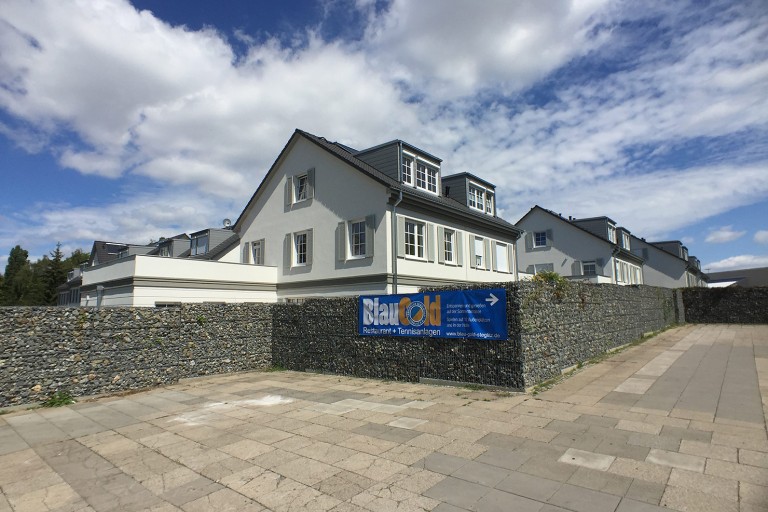
Thanks to esteemed colleague Mr Buhr, who kicks off this new SLAB Collection with the above photo he recently submitted. This series will probe the challenging aesthetic dimension of damage in modern façade design, and in doing so will debunk the authority of the surface in contemporary architecture. It will also be good for a whole bunch of laughs.

Let’s go at this one layer for layer. First there’s the smeggy, cream-cheese surface treatment; the exterior equivalent of anaglypta wallpaper and just as soul destroying. Below this a chalky crust of hardened powder has been adhered to a flimsy aluminium mesh, underneath which everything becomes rather obscene looking. I should imagine that the mud-encrusted anus of a Merino sheep is not dissimilar in appearence.

Judging by the subtle dent in the blue metal surface, this is probably a door frame which has been rear-ended by some motor vehicle or other. The resulting scar is a vulgar reminder of what is keeping modern homo-sapiens safe from the elements, and poses the quesiton of whether or not we are happy for our most visible of art forms to appear as if it has been congealed rather than composed.

The “Modern Façades Today Now” Collection

Divider
Divider

Buildings | Place Making

No Parking Any Time

L.P. / Sat 5th Jun ’10

Guest writer Lorenzo Poglia is a neuroscientist from Geneva, and co-author of the paper “Ultrastructural Modifications of Spine and Synapse Morphology by SAP97”. Here he sends us the first of two architectural dispatches from his home town.


Uni dAfour, Geneva [Foto: Lorenzo Poglia]

If you’re looking for an intellectual parking spot, but without the cars, Uni Dufour is your next stop. Uni Dufour: a squared block of cement with regular apertures that stand in for windows. For most of dog-walkers in the neighborhood, it’s just a clash of cement among harmonious old stones. For the fetishist architects wearing over-designed eyewear, Uni Dufour is a typical post-Corbusian building conceived in 1974 by Werner Francesco, Gilbert Paux and Jacques Vicari. To me, this building just represents 6 years of administrative time wasting until I finally got my fucking PhD. Maybe as a biologist, I would have appreciated it much more if the project would have been realized according to original plan. Indeed, a vegetal blanket was supposed to have covered the concrete skeleton. Unfortunately, this architectural wet dream turned out to be a technical nightmare which left the building in the shame of its nudity. Since then, several competitions have been organized in order to restore the project to its original dignity.

The artist Tatsuo Miyajima, whose LED displays were recently tacked on to the building to improve its appearance, called Uni Dufour “the fortress of human science”. But I’ve forgotten to say that it’s also supposed to hold the large human-science lectures for first year suckers.

So of course the psychitects loved Miyajima’s idea of putting displays with numbers that stochastically change at a particular frequency that has been set by random individuals recruited into the project at its inception. Kind of bringing individuality in the middle of a global movement, as if to say, let’s lay the pedestrians on the psychoanalyst’s couch! During the day at least these displays give a shiny touch to the building, while at night the discrepancy between the frequency of each light’s switching from a number to an other lends the illusion of a lighter shaped building through their glittering effect.

The last trick used to modify the aesthetic perception of Uni Dufour is produced by two phrases. The first is “Inventer, c’est penser à côté” – “Inventing is thinking sideways” (Albert Einstein). A great way of suggesting the reader is entering a world of ideas and should forget about the building; as if to say “please, do not think around here, go further to get the answer”. A bit like asking someone to look left beyond the building so as to activate the right (creative) hemisphere.

The second phrase is by Simone de Beauvoir: “On ne naît pas femme, on le devient” – “One is not born woman, but becomes it”. Besides being a clear suggestion of feminine sensuality, these words introduce the notion that the character of the building isn’t a natural trait, but something that had to be acquired over time. Thirty years to turn into a grown up seems like a pretty long time …

General Dufour, who brought peace during the Swiss civilian war of 1847, has still a long run to gallop on his bronze horse covered in pigeon shit before bringing peace to Geneva’s architectural trauma.

Divider
Divider

Graffiti | Suburban Environment

Where My Villagers At?

I.W. / Wed 2nd Jun ’10


Protect your neck kid

There’s something rather touching about graffiti in the provinces, such as the two sad examples here which I snapped in Bonlanden. As a product of American inner cities, graffiti is probably still sufficiently alien to shock the older inhabitants of a small village. But as a city dweller, able to read the cultural signs, it is reduced to pathetic pre-pubescent posturing. You just want to take that young sprayer under your wing, and fix them up with some propper tuition on the mean streets of downtown Stuttgart.


An orthographic ghetto, one assumes

The appropriation of “Westside” as a motif is so ironic in the context of Bonlanden. At little over 900 meters wide, the village doesn’t exactly offer much territory for the budding warlord to fight over. Judging by the droopy arrows, the unfortunately spelt “Getto Gang” seems to be the work of the same author.

But villages can be pretty sinister places – German ones especially so – which sometimes feel as alien to me as, say, Brooklyn might to a resident of this community. I have to wonder what’s going on behind all those beady-eyed windows with their net curtain veils and shutters. Maybe some multi-generational turf war really is being faught at municipal level between the families of local politicians, and the graffiti is just the tip of the iceberg; its juvenile mode of expression refracted through the lens of hip-hop culture.

Divider
Divider

Activism | Ephermera | Fiction

An Easy Target (Rant)

O.M. / Mon 31st May ’10

I snapped this thing a month or so ago, a smirk twisting upon my face in irony-laden amusement. To be honest, any time I get anywhere close to Berlin’s very own little ‘ground zero’ I get my grimace on, so it was a mild relief to rest my eyes upon an image so ridiculous and flimsy.

message mixer xxlMessage Mixer XXL

So I guess this is the cultural resonance of OMA’s Seattle Public Library. For anyone wishing something that avant would ever get built at a similar scale in the heart of poor, uncultivated Berlin, I mean by poor rich, uncultivated Federal Rupublic of Germany, well, I’m sorry to break it to you, not any time soon. Although the Humboldt Forum is a project being driven at the federal level and to no small extent by the donations of private interests with dubious motives, we in Berlin are, politically speaking, willing victims.

But I don’t even know how to begin with really looking at this situation I took a picture of, there’s so much going on. Its a cartoon of some futuristic rhomboid printed on an info box/viewing platform which is itself nothing more than glorified scaffolding wrapped in vinyl tarpaulins. The pavilion being represented on the pavilion is in direct contradiction to the project that will in fact be built on this site, though its depiction has been done in such a silly way that it seems to indicate a certain patronizing attitude of those powers that be. And that, I think is it, I get it. This whole thing is just so cheap, not only in how a massive cultural center has been conceived, but also in how another has been destroyed, as well as in how a temporary pavilion has been constructed, not to mention in how that very entity of the information box itself has been not only degraded but also mocked. Way back when the design of such a pavilion was seen as an opportunity to give some hot young architecture office to chance to get out there and mix it up – like in the case of Schneider and Schumacher on Potsdamer Platz. Here such an opportunity has not only been denied but also cynically derided, and yeah, its kinda funny, ha ha.

Then my eye wanders to the other picture, printed around the corner, and I start to feel the heebee jeebees all over again.

Divider
Divider

Place Making | Public Space

Column Conundrum

D.S. / Wed 26th May ’10

I was already enjoying the mild psychogeographical effect of Nigerian beers at Karneval when I noticed this peculiar monument on Mehringplatz. It seemed very much at odds with the little understanding of classical orders that I salvaged from architecture school. A column with mild entasis but without capital and anything to support but the sweet, cannabinoid May air. It fit perfectly in the context of carnival and the suspension of the everyday it creates.

Friedenssäule on Mehringplatz with Angel missingFriedenssäule on Mehringplatz with Angel missing

The vacant symbolism of a column bulging under the weight of nothing made me think of the Stadtschloss. There had been recent news of the snags the project had hit. With public enthusiasm waning into mild boredom, it is increasingly unlikely that the target of 80 mil. in private donations required for the construction of the cupola and the baroque facades will ever be met. Apparently, the budget in place only allows for the construction of the castle’s bare concrete core. It’s ironic that the representational center of Berlin would then be filled with a building not that different in aesthetic from the gutted Palast der Republik aesthetic it was meant to dispel.

Which brings back to mind the Stadtschloss competition entry by Kuehn Malvezzi, vindicated by these developments. I found an English translation of Philip Oswalt’s very insightful discussion of the conundrums of this whole undertaking and of Kuehn Malvezzi’s entry here. Their entry plays on the dire financial reality of the Stadtschloss project and turns them into a concept. Their phased proposal was to first construct a stripped down castle out of brick that could persist on its own, to which the baroque facade could be added later, once funding allows. With almost clairvoyant foresight, it omits the cupola altogether.

The botched undertaking of plonking a castle cum cupola on the Palast site in order to erase any memories of a building with associations that, in the eye of some, continue to taint our history like an oil slick, is fast turning the Stadtschloss into an architectural Deepwater Horizon that is now, debt crisis and all, increasingly revealed as the castle in the sky pipe dream that it always was, to many of us. The Prussian turd might just be sinking.

Deepwater Horizon courtesy http://gcaptain.com/maritime/blog/wp-content/uploads/2010/04/IMG_1143.jpgDeepwater Horizon

Divider
Divider

Activism | Buildings | Hardscape

Hejduk – Upshots and Asides

I.W. / Sun 23rd May ’10

Due to a savage workload and a beastly cold, or a beastly workload and a savage cold, I’ve fallen way behind in the coverage of the Hejduk saga. Suffice to say, much has happened, and much has been achieved. I’ll keep the documentation of events to a minimum, since Jim has already done such a good job over at Architecture in Berlin.

So, here’s what happened

On Monday 19th April a senate organised “Baukollegium” was held, where Robert Slinger, Florian Kohl and Matthias Reese presented the case for Hejduk’s “Tower With Wings” to Senate Building Director, Regula Lüscher and others. At this meeting they gave a general presentation about the history of the building, and the context in which it was built. They also read out a letter penned by Renata Hejduk, who had intended to come to Berlin, but had been held back by recent volcanic activity, and delivered the petition. Present too, was the building’s new owner.


Hejduk’s colour for Berlin: RAL 6011

The 3000 signatures gathered in support of the buidling, were literally a weighty indicator to the Kollegium and its panel of experts that informed opinion held the changes for a defacement of Berlin’s cultural heritage. In short, the petition helped to turn around a situation in which Mr Prajs wasn’t actaully legally required to seek anyone’s approval.

Results of the meeting were announced in the Berliner Morgenpost on the 24th April in the form of an interview with Frau Lüscher: the building is to be restored to its original design, including the colour scheme – which of course means that the removed balconies will need to be rebuilt.

An unexpected twist

As if this weren’t good enough by itself – and this is where the story takes a really unexpected twist – two pavillions designed by Hejduk could now end up being built on the scrappy bit of land in front of the building, thus “completing” the ensemble. Robert Slinger of Kapok proposed the idea in a mail written to Hejduk three weeks ago. Although he seemd to think the idea was a bit of a pipe dream, it was clear that realising these structures would make perfect sense in the context of a public park. Funding might well also be secured out of a pot set aside for urban parks and public spaces.

Hekduk’s x-ray drawings of the Tower with its two pavillions

The two pavillions, “Studio for the painter”, and “Studio for the musician” were both exhibited as centerpieces in 1987 IBA exhibition held at the Martin Gropius Building in Berlin. Why they never made it from the museum to the street isn’t clear, but I can well imagine that they probably just looked too damned scary. Robert Slinger offered a more practical reason when we chatted last weekend: if built at the scale suggested by Hejduk, the pavillions would have to confirm to all the regulations to which a ‘normal’ building must abide. Fire safety and questions of maintenance, ownership and access all come to mind. Shrink the pavillions to the size of sculptures though, and the idea dies.

Asides

I’d like to quickly go back to the Baukollegium. One salacious detail about the meeting is that the tower’s new owner, Mr Sruel Prajs, turned up with absolutely no defence prepared for the changes made to the building. He simply didn’t know what he’d aquired, which seems a little odd. Is a passing knowledge of architecture not required of property dealers, in the same way that, say, a fishmonger knows a thing or two about fish? No wonder they talk about ‘objects’.

Admittedly, defending one’s own ignorance is a hard thing to do, but an honest answer would have had some dignity. If I might be allowed to speculate for a moment, it’s worth noting that the Berlinhaus’s offices are located in a building next to Hejduk’s tower. It’s a detail I hadn’t noticed whilst the campaign was hotting up, but maybe the reason for the white paint job and pink balconies was to pretty-up the view from Prajs’ office window. A bone-headed whim. To paraphrase Oscar Wilde, this sounds like a case of “a man who knows the price of everything and the value of nothing.”

Signs and signifiers

Just out of interest, I dropped by BerlinHaus’ office building the other week. I’m not sure why. Probably a bit like when Columbo makes a false exit, then comes back to his suspect and says “just one more thing …” Maybe I was childishly looking for a detail which would smugly confirm my worst suspicions about a property dealer. But a quick look at the company’s sign made details irrelevant:

The many faces of BerlinHaus

Chasing down evidence to support your own grim world-view can fill you with a great sense of purpose. But having all your darkest prejudices confirmed so swiftly is thoroughly deflating. I mean: thirty-six companies? Alright: it doesn’t have to mean there’s something dubious going on. But there’ll be a benefit to it which far outweighs the disadvantages of a complicated tax-return.

Divider
Divider

Erosion | Ornament | Signage

A Slab for William Kelly

C.D. / Sat 24th Apr ’10

1grave

This gravestone is next to Farahy Church near the village of Kildorrery, County Cork, Ireland. It is one of the small number of older graves in the churchyard which seem to have been retouched in the last couple of decades. The groove of the original calligraphic carving has been cleaned and reinscribed with black pigment. The result is this striking combination of a weathered slab with the crisp new lines of recent re-etching. The facelift draws attention to the fact that the slab would itself have originally been a pristine near-white, and so the writing would have been even more impressive in 1799.

Strange to our eyes are the haphazard-seeming abbreviations, particularly on the right margin. Given the quality of the lettering, surely the stonemason could have foreseen the lack of space for the final letters of some words? In fact there is sufficient space for the letters in question, it just has not been used. Two explanations for these abbreviations come to mind: 1. the mason was charging a per-letter rate and the client saved some money and still got the vital information on the slab, or 2. they simply did not see these abbreviations as anomalous in the way that we might now.

2graves

Over 120 years later, the Kelly family erected another headstone alongside, this time in the Celtic Romanesque revival style that had taken hold in the 19th century. This type of gravestone is in imitation of the surviving Irish monastic high crosses, which date from as early as the 7th century. In the 19th and early 20th centuries, resurgent Catholicism and nationalism cherished the early monastic tradition as a key source of indigenous (pre-English colonization) Irish iconography. Stonemasonry had clearly undergone some changes in the intervening years, as the newer grave seems to have been mechanically lettered in a standard font and with a modern respect for left and right margins, and for consistent abbreviation. It is also worth noting that only the lower section of the newer grave has been tailored to the Kellys’ needs, the small connecting part and the cross itself being generic. A further change is in the kind of information that is conveyed and emphasized. Whereas the more recent grave simply lists the names and death dates of the dearly departed (the most recent member of the family was buried here in 1994), all of the flash-bang lettering of the older grave is used to record the name of the person who paid for the grave (Dan Kelly), and not for the poor old dead father.

Divider
Divider

Damage fetishism | Erosion | Miscellanea | Urban Environment

Rasterized Forensic Bits of Decay

D.S. / Fri 23rd Apr ’10

This caught my eye, cycling up Brunnenstraße in Wedding. Mosaics that appeared as surfaces of urban forensics, as rasterized samples of use and abuse, with each cavity the discrete recording of an incident or event of applied impact or abrasion, much like a punched card of an early computer.  I quickly felt reassured by the proliferation of incidents at pedestrian levels.  But what about the ones higher up the column, out of human reach? Already, these hermeneutics were beginning to crumble.

_DSC0092_900

decay bitmap wedding

Was it thermal expansion by sunlight?  On the east, a clustering of events along the left edge seemed to confirm this. Thermal differentials of materials – cooled by night, then heated by the morning sun – were perhaps here the highest. The southern surface showed a much more uniform distribution of incidents, with a more gradual increase in surface temperatures before exposure to the sun. Inward surfaces without direct solar exposure displayed no incidents.

The observed increase in events at human height between the aluminum profiles is attributed to the frequent posting and removal of bills.

decay bitmap collaged_900

Divider
Divider